Deschutes Estuary Restoration Project
Client: Washington State Departments of Ecology and Enterprise Services
Overview of Floyd|Snider Contributions
Project Summary
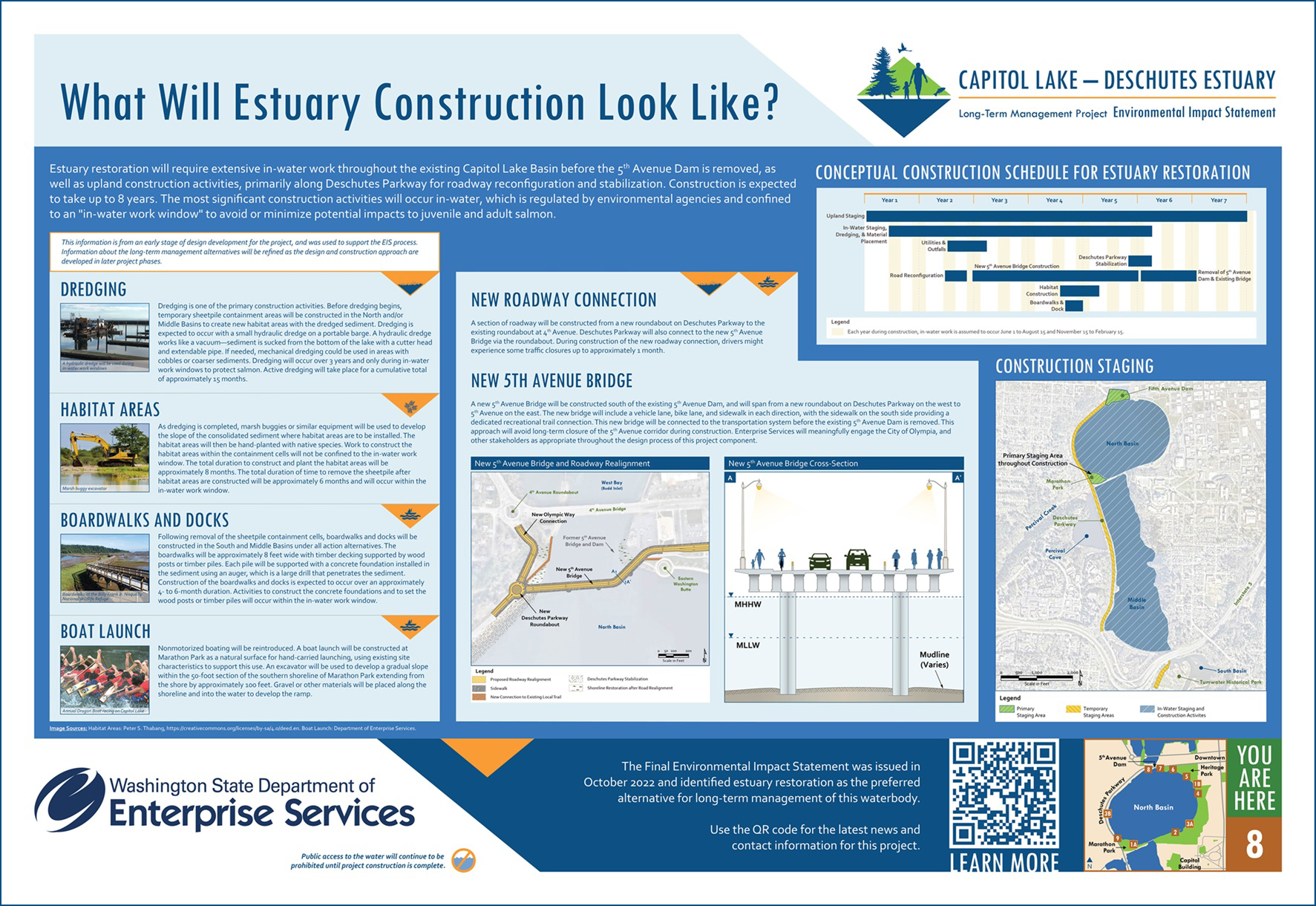
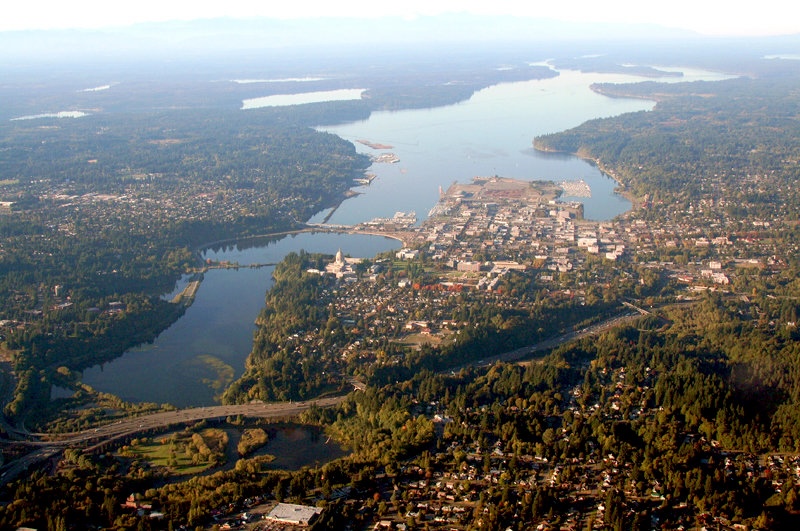
Capitol Lake was formed in 1951 following construction of a dam that restricted flow between the Deschutes River and Puget Sound and transformed the expansive estuary into a freshwater lake.
Capitol Lake was formed in 1951 following construction of a dam that restricted flow between the Deschutes River and Puget Sound and transformed the expansive estuary into a freshwater lake. The sole purpose of the dam was to create a reflecting pool of water for the Washington State Capitol Campus. Today, the 260-acre Capitol Lake basin is plagued by environmental issues including the presence of invasive species, violations of water quality standards, and inadequate sediment management. It is closed to active public use. The stakeholder discourse regarding the resource was polarized for decades given the stark difference in management options for this vast landscape and water body in downtown Olympia.
Our Approach
The interdisciplinary analysis considered potential impacts and benefits of the long-term management options, including an alternative that maintained the dam and Capitol Lake, one that proposed estuary restoration with removal of the dam, and a hybrid of the two.
The Final EIS was issued in the fall of 2022, and it was not appealed. Floyd|Snider developed a custom decision-making process that numerically scored the alternatives against a broad range of criteria, including and incorporating stakeholder input. Of the three action alternatives (Managed Lake, Estuary, or Hybrid), estuary restoration was identified as the preferred alternative, with the greatest range of benefits and stakeholder support.
In 2023, Floyd|Snider was selected to lead the design and permitting of the Deschutes Estuary Restoration Project. Under this project, a new 5th Avenue Bridge will be built with vehicle, pedestrian, and bicycle lanes, and the existing 5th Avenue Bridge and Dam will be removed to restore tidal exchange. Tidal flats will be the predominant habitat type with marsh habitat established along the shoreline, which will improve ecological conditions in the project area. Future phases of the project may involve constructing boardwalks along the shoreline and will restore public use of the water body. Floyd|Snider prepared the comprehensive permit applications for these project actions and is leading regulatory negotiations at the federal, state, and local level to obtain the suite of environmental permits and approvals.
Floyd|Snider also led the negotiations with local governments and other key stakeholders to develop and execute a legally binding Interlocal Agreement to provide shared funding for long-term maintenance of the restored estuary.
Throughout this project, Floyd|Snider has implemented a public and stakeholder engagement approach that convened Executive, Technical, and Funding and Governance Work Groups, as well as a Community Sounding Board. It has leveraged design partnerships with the Tribe, state agencies, and local municipalities and has provided opportunities for the public to provide purposeful, structured, and timely input.
Project Milestones
2021. Draft EIS issued
2022. Final EIS with Preferred Alternative issued
2024. Completion of 30% design
2025. Anticipated completion of 60% design
2026. Anticipated completion of final design (pending funding)
2027. Anticipated mobilization for construction (pending funding)
Our Approach
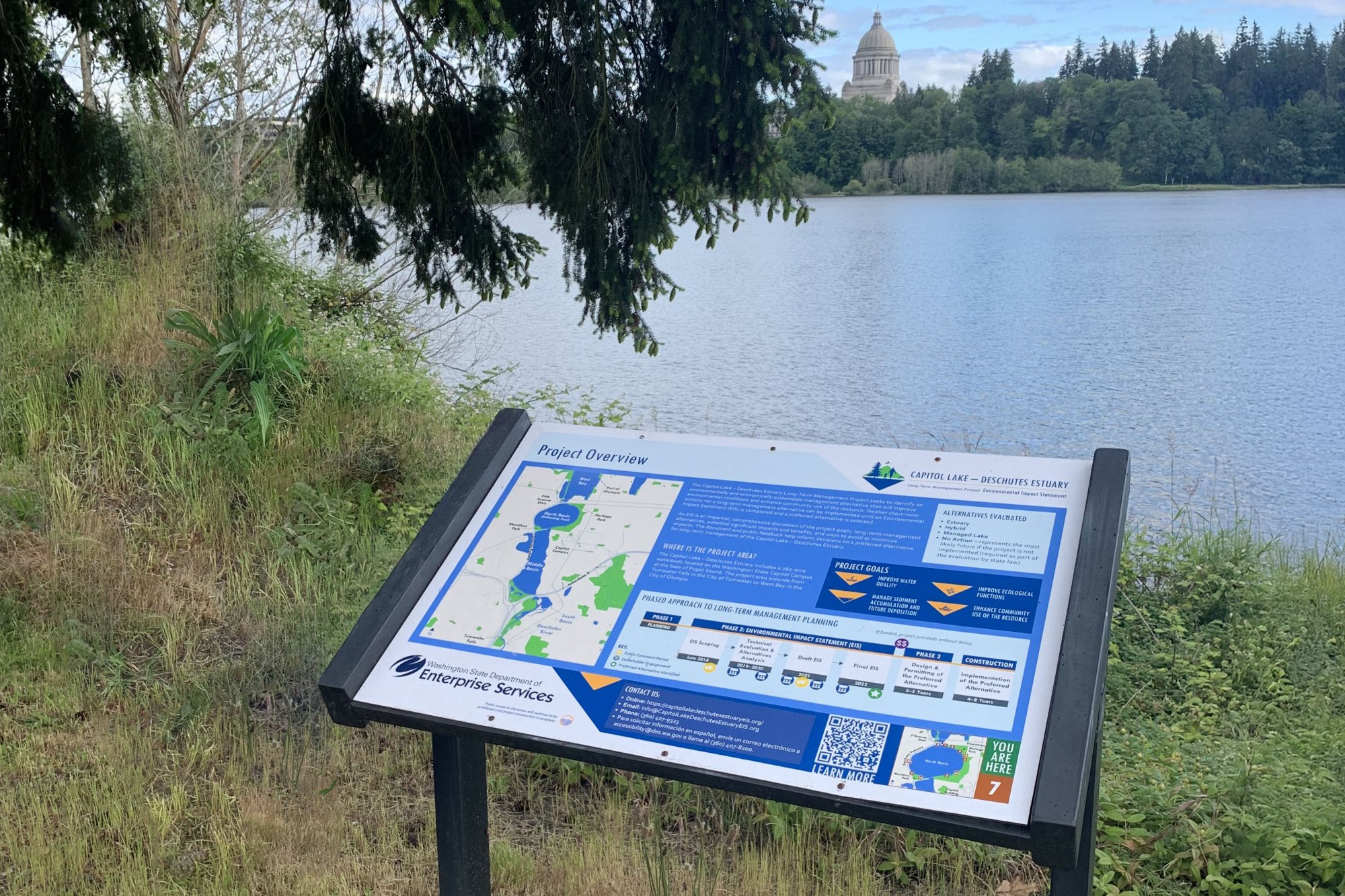
In 2018, Floyd|Snider was selected to lead an Environmental Impact Statement (EIS) process. The interdisciplinary analysis considered potential impacts and benefits of the long-term management options, including an alternative that maintained the dam and Capitol Lake, one that proposed estuary restoration with removal of the dam, and a hybrid of the two.
The Final EIS was issued in the fall of 2022, and it was not appealed. Floyd|Snider developed a custom decision-making process that numerically scored the alternatives against a broad range of criteria, including and incorporating stakeholder input. Of the three action alternatives (Managed Lake, Estuary, or Hybrid), estuary restoration was identified as the preferred alternative, with the greatest range of benefits and stakeholder support.
In 2023, Floyd|Snider was selected to lead the design and permitting of the Deschutes Estuary Restoration Project. Under this project, a new 5th Avenue Bridge will be built with vehicle, pedestrian, and bicycle lanes, and the existing 5th Avenue Bridge and Dam will be removed to restore tidal exchange. Tidal flats will be the predominant habitat type with marsh habitat established along the shoreline, which will improve ecological conditions in the project area. Future phases of the project may involve constructing boardwalks along the shoreline and will restore public use of the water body. Floyd|Snider prepared the comprehensive permit applications for these project actions and is leading regulatory negotiations at the federal, state, and local level to obtain the suite of environmental permits and approvals.
Floyd|Snider also led the negotiations with local governments and other key stakeholders to develop and execute a legally binding Interlocal Agreement to provide shared funding for long-term maintenance of the restored estuary.
Throughout this project, Floyd|Snider has implemented a public and stakeholder engagement approach that convened Executive, Technical, and Funding and Governance Work Groups, as well as a Community Sounding Board. It has leveraged design partnerships with the Tribe, state agencies, and local municipalities and has provided opportunities for the public to provide purposeful, structured, and timely input.
Project Milestones
2021. Draft EIS issued
2022. Final EIS with Preferred Alternative issued
2024. Completion of 30% design
2025. Anticipated completion of 60% design
2026. Anticipated completion of final design (pending funding)
2027. Anticipated mobilization for construction (pending funding)