Deschutes Estuary Restoration Project
Client: Washington State Departments of Ecology and Enterprise Services
Overview of Floyd|Snider Contributions
Project Summary
Capitol Lake was formed in 1951 following construction of a dam, which restricted flow between the Deschutes River and Puget Sound, and transformed the expansive estuary into a freshwater lake.
Capitol Lake was formed in 1951 following construction of a dam, which restricted flow between the Deschutes River and Puget Sound, and transformed the expansive estuary into a freshwater lake. The sole purpose of the dam was to create a reflecting pool of water for the Washington State Capitol Campus. Today, the 260-acre Capitol Lake basin is plagued by environmental issues including the presence of invasive species, violations of water quality standards, and inadequate sediment management. It is closed to active public use. The stakeholder discourse regarding the resource was polarized for decades given the stark difference in management options for this vast landscape and water body in downtown Olympia.
Our Approach
In 2016, Floyd|Snider began its work with the Washington State Department of Enterprise Services (DES), and since that time, the team has made continual progress to advance the planning, design, permitting, community outreach, regional partnership, and funding strategy for this complex project. During EIS scoping, Floyd|Snider worked with local governments, regulatory agencies, the Squaxin Island Tribe, and community members to identify a set of goals that were common across the stakeholder groups and build consensus. During the multiyear EIS process, the project team organized over 40 work group meetings and community events to collect input on technical considerations, regulatory requirements, project alternatives, and desired community use. The project team developed a method to quantify this input, along with the technical analyses and cost estimate, which DES used as part of their process to identify a preferred alternative—estuary restoration.
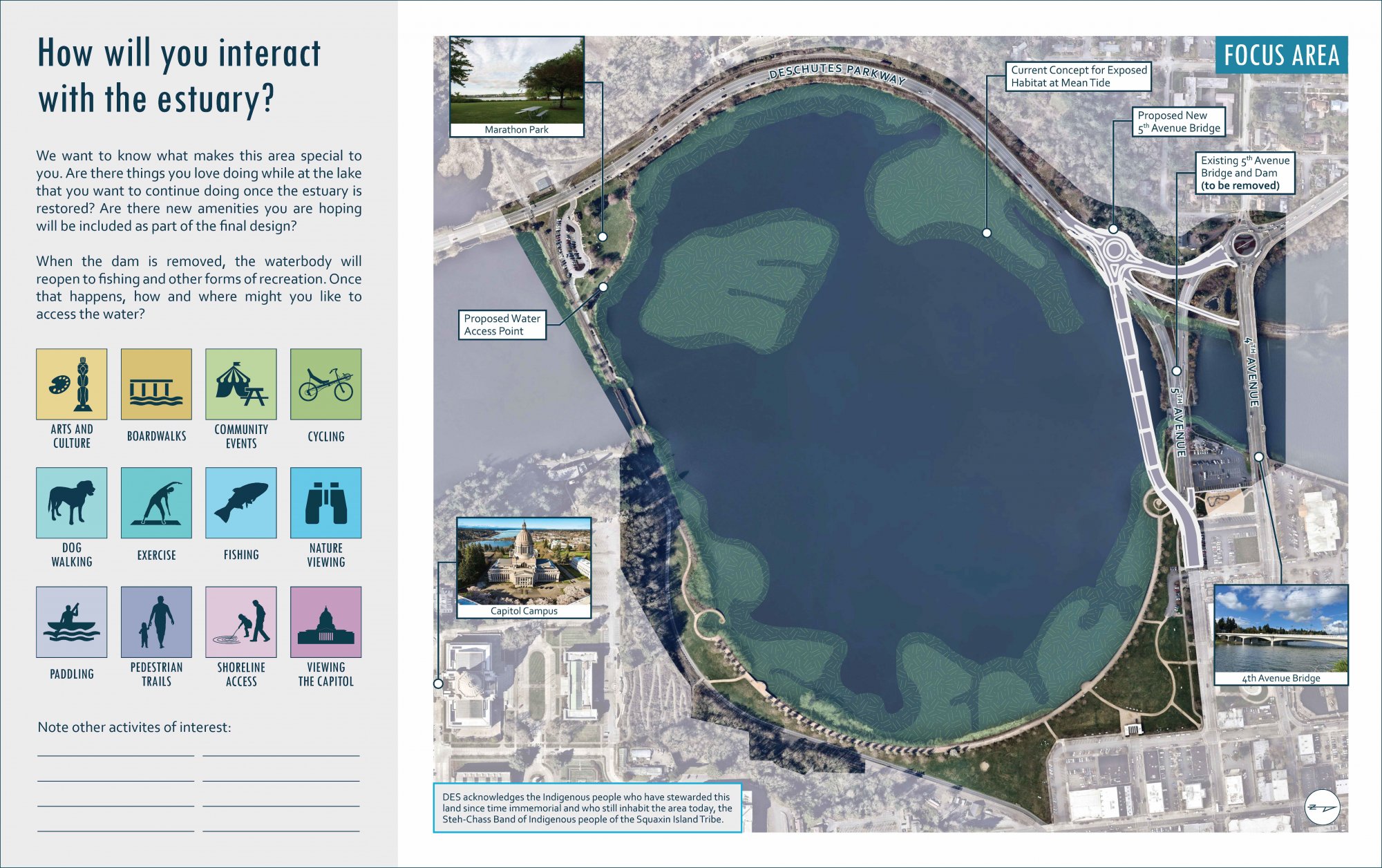
In 2023, Floyd|Snider was selected to lead the design and permitting of the Deschutes Estuary Restoration Project. Under the Deschutes Estuary Restoration Project, a new 5th Avenue Bridge will be built with vehicle, pedestrian, and bicycle lanes, and the existing 5th Avenue Bridge and Dam will be removed to restore tidal exchange. Tidal flats will be the predominant habitat type with marsh habitat established along the shoreline, which will improve ecological conditions in the project area. Future phases of the project may construct boardwalks along the shoreline and will restore public use of the water body.
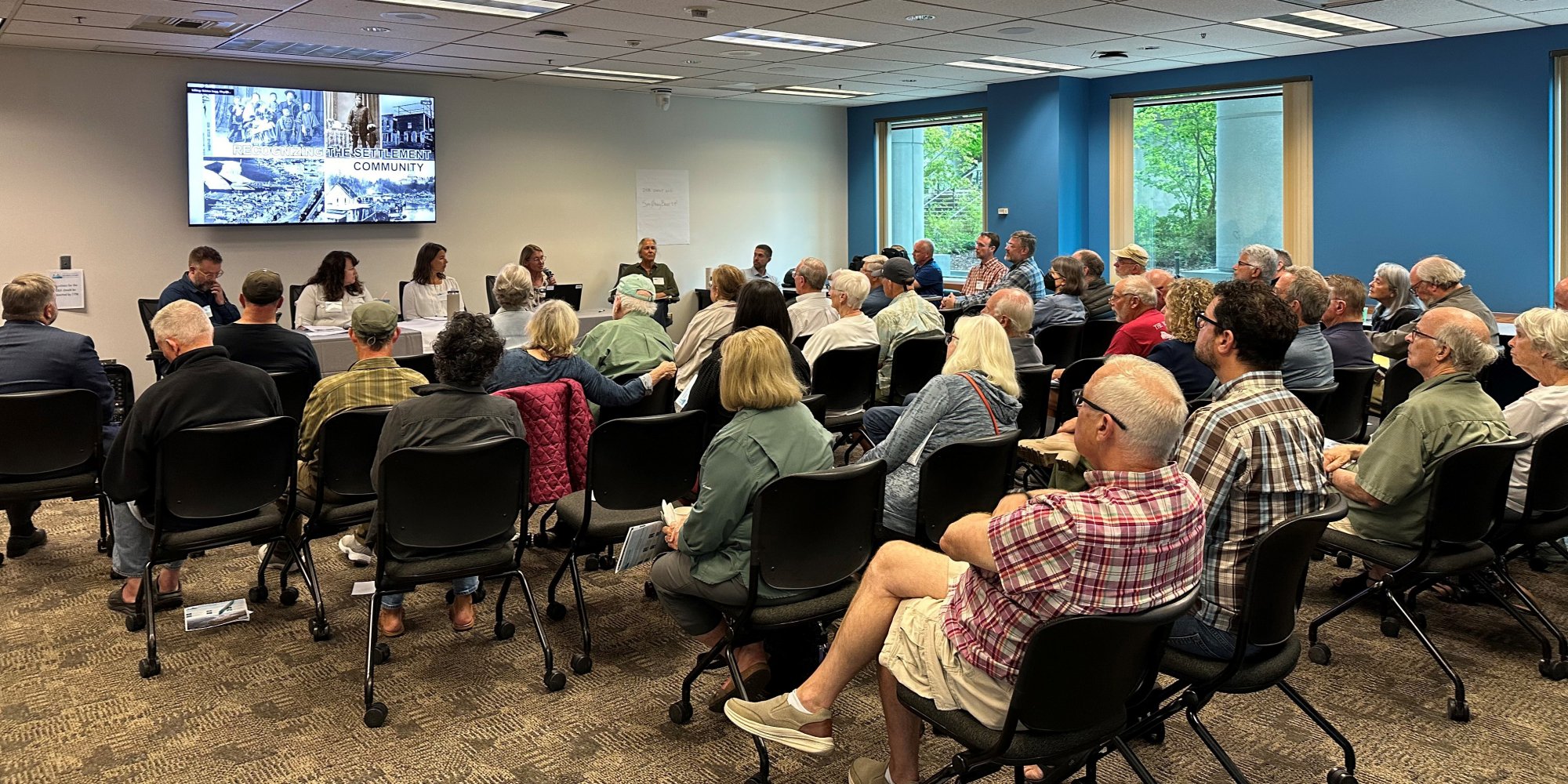
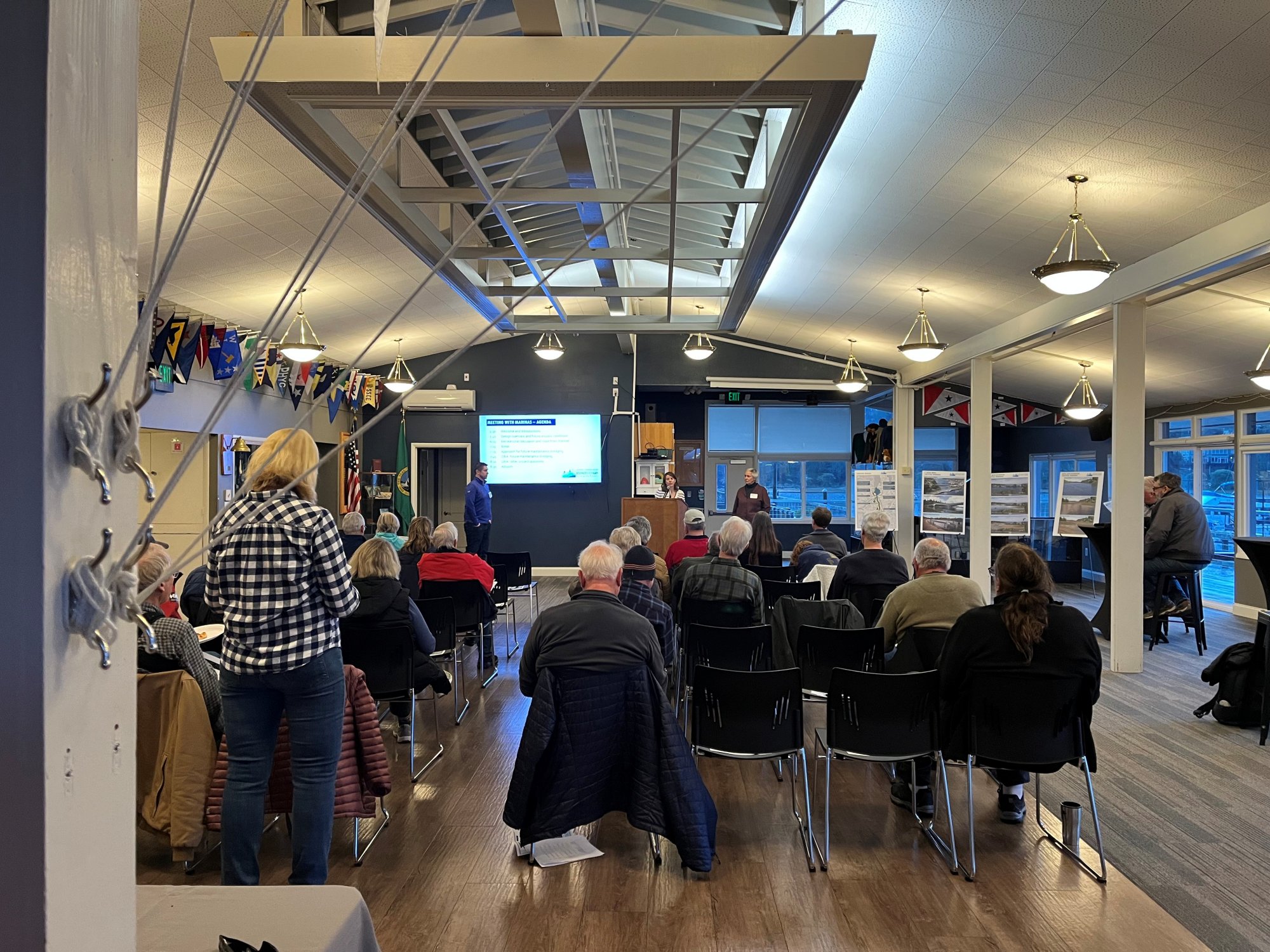
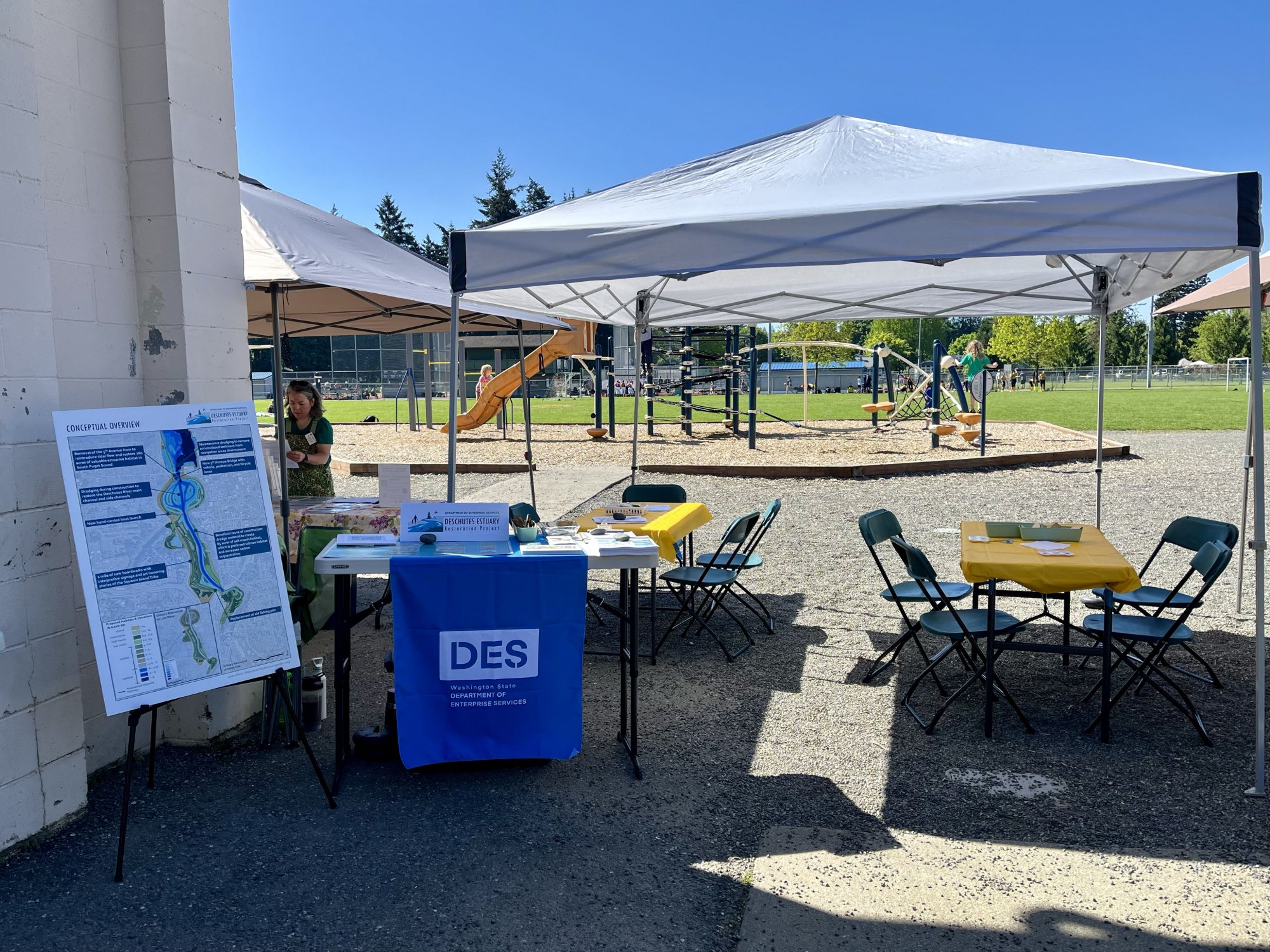
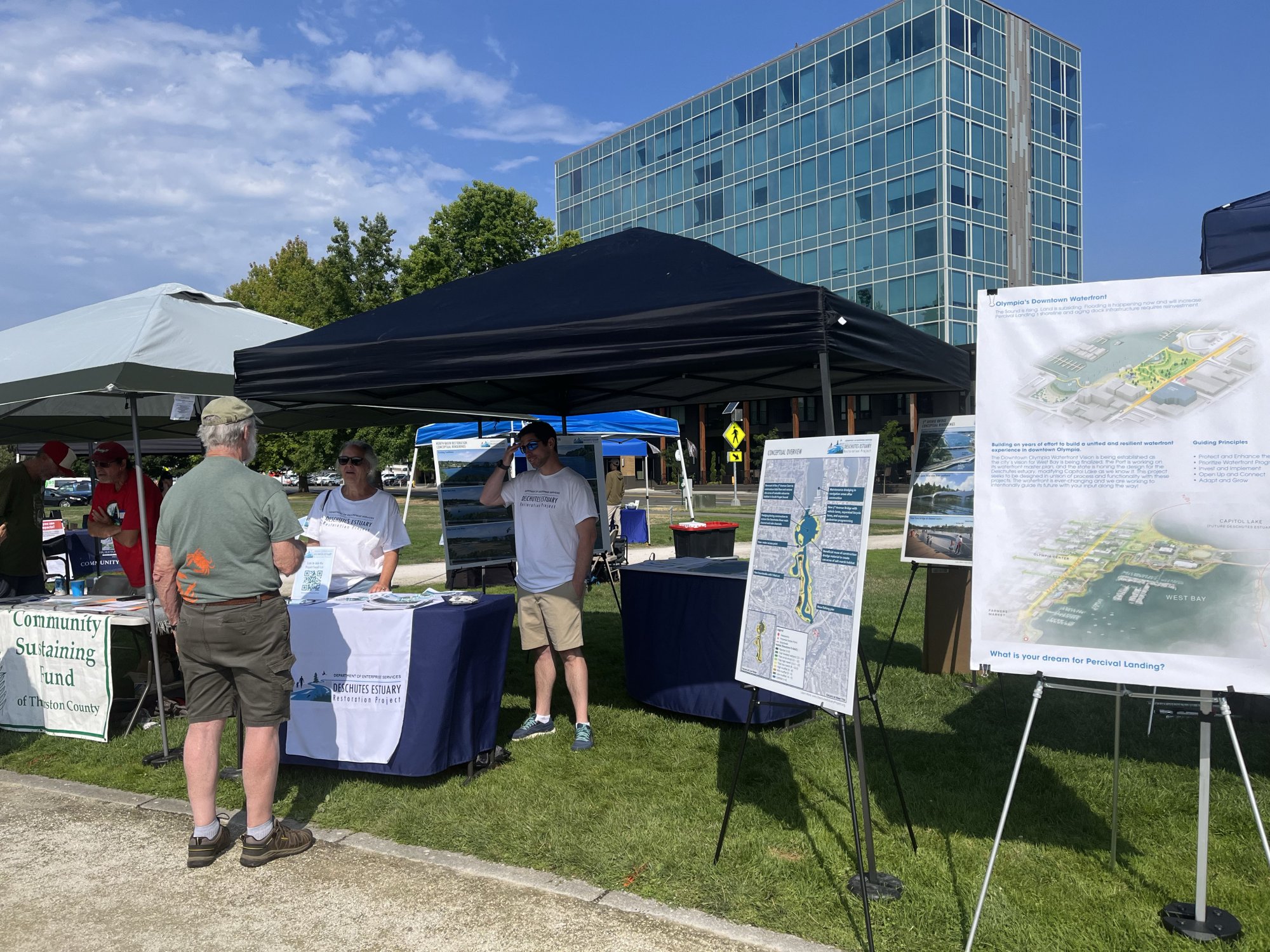
Floyd|Snider has strategically advanced regional engagement throughout the design phase, with the Squaxin Island Tribe, City of Olympia, and City of Tumwater serving as design partners. These partners inform estuary habitat restoration, the 5th Avenue Bridge design, and the approach to sea level rise resiliency. Floyd|Snider also plans and implements outreach activities with the community, including the following:
- Interest group listening sessions
- Community meetings
- Communication through the project website and quarterly newsletters
- Participation in local festivals and other community events
Floyd|Snider led the negotiations with local governments and other key stakeholders to develop and execute a legally binding Interlocal Agreement to provide shared funding for long-term maintenance of the restored estuary. This agreement allows the estuary to coexist with downstream uses, including recreational marinas and Port facilities.
Project Milestones
2021. Draft EIS issued
2022. Final EIS with Preferred Alternative issued
2024. Completion of 30% design
2025. Anticipated completion of 60% design
2026. Anticipated completion of final design (pending funding)
2027. Anticipated mobilization for construction (pending funding)
Our Approach
The first Environmental Impact Statement (EIS) to address environmental impairments in Capitol Lake was completed in the 1970s, and another was completed in the 1990s; neither of these efforts led to a defined plan for long-term management of the water body due to continued differences of opinions. In 2016, Floyd|Snider began its work with the Washington State Department of Enterprise Services (DES), and since that time, the team has made continual progress to advance the planning, design, permitting, community outreach, regional partnership, and funding strategy for this complex project. During EIS scoping, Floyd|Snider worked with local governments, regulatory agencies, the Squaxin Island Tribe, and community members to identify a set of goals that were common across the stakeholder groups and build consensus. During the multiyear EIS process, the project team organized over 40 work group meetings and community events to collect input on technical considerations, regulatory requirements, project alternatives, and desired community use. The project team developed a method to quantify this input, along with the technical analyses and cost estimate, which DES used as part of their process to identify a preferred alternative—estuary restoration.
In 2023, Floyd|Snider was selected to lead the design and permitting of the Deschutes Estuary Restoration Project. Under the Deschutes Estuary Restoration Project, a new 5th Avenue Bridge will be built with vehicle, pedestrian, and bicycle lanes, and the existing 5th Avenue Bridge and Dam will be removed to restore tidal exchange. Tidal flats will be the predominant habitat type with marsh habitat established along the shoreline, which will improve ecological conditions in the project area. Future phases of the project may construct boardwalks along the shoreline and will restore public use of the water body.
Floyd|Snider has strategically advanced regional engagement throughout the design phase, with the Squaxin Island Tribe, City of Olympia, and City of Tumwater serving as design partners. These partners inform estuary habitat restoration, the 5th Avenue Bridge design, and the approach to sea level rise resiliency. Floyd|Snider also plans and implements outreach activities with the community, including the following:
- Interest group listening sessions
- Community meetings
- Communication through the project website and quarterly newsletters
- Participation in local festivals and other community events
Floyd|Snider led the negotiations with local governments and other key stakeholders to develop and execute a legally binding Interlocal Agreement to provide shared funding for long-term maintenance of the restored estuary. This agreement allows the estuary to coexist with downstream uses, including recreational marinas and Port facilities.
Project Milestones
2021. Draft EIS issued
2022. Final EIS with Preferred Alternative issued
2024. Completion of 30% design
2025. Anticipated completion of 60% design
2026. Anticipated completion of final design (pending funding)
2027. Anticipated mobilization for construction (pending funding)