
Mouth of Duwamish Wet Weather Facilities
Client: King County Wastewater Treatment Division
Overview of Floyd|Snider Contributions
Project Summary
King County is working to control five CSO outfalls in the area of the mouth of the Duwamish River.
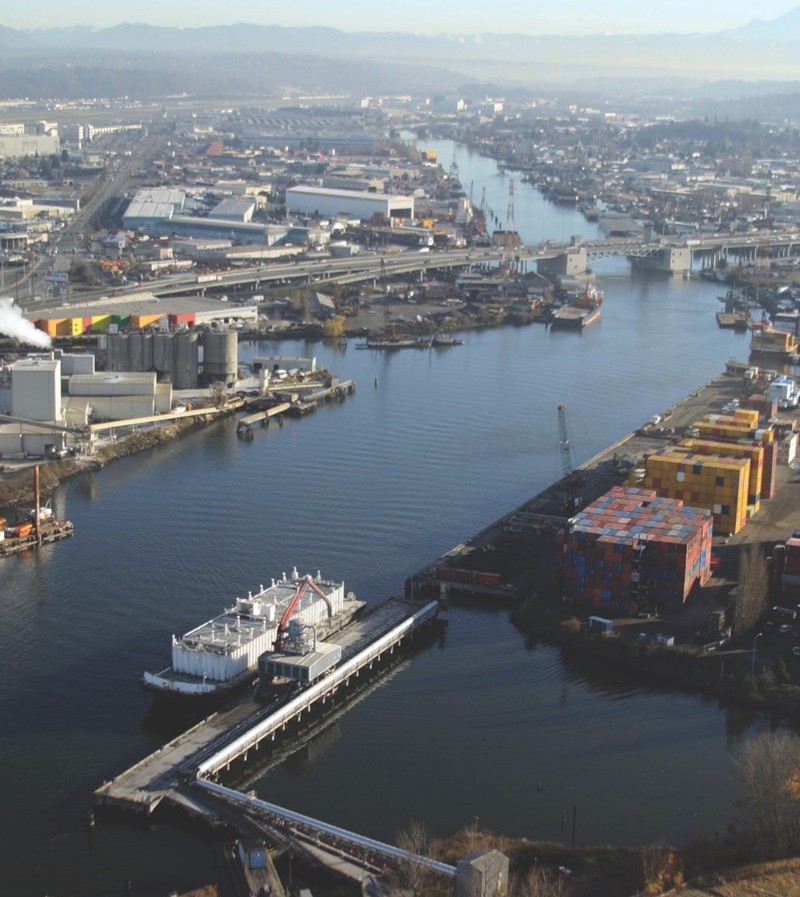
King County is working to control five CSO outfalls in the area of the mouth of the Duwamish River. The outfalls are located in the east and west waterways of the Duwamish River. The project will consist of building a new 228 million-gallons-per-day wet weather treatment station (WWTS) on a 9-acre site, and a new 7-million-gallon wet weather storage tank. The Mouth of Duwamish Wet Weather Facilities is the County’s largest CSO project to date and will prevent approximately 430 million gallons of polluted water from entering Elliott Bay and the Duwamish River per year on average. The project is being designed and implemented under a Consent Decree with Ecology, the U.S. Environmental Protection Agency, and the U.S. Department of Justice. The County’s CSO system is addressed in the County’s West Point Treatment Plant National Pollutant Discharge Elimination System (NPDES) permit and the new WWTS will be governed by this permit as well.
Our Approach
Floyd|Snider is leading the environmental review and providing federal and state permitting support to King County, including for USACE Section 404/10 Permit, Section 408 Approval; Federal Services Section 7 and Section 106 consultations; Ecology 401 Water Quality Certification and Construction Stormwater General Permits; WDFW Hydraulic Project Approval; and WDNR Aquatic Use Authorization.
Floyd|Snider is leading the environmental review and providing federal and state permitting support to King County, including for USACE Section 404/10 Permit, Section 408 Approval; Federal Services Section 7 and Section 106 consultations; Ecology 401 Water Quality Certification and Construction Stormwater General Permits; WDFW Hydraulic Project Approval; and WDNR Aquatic Use Authorization. This includes supporting agency coordination and preparing SEPA analysis, permit acquisition strategies, and Joint Aquatic Resources Permit Application and other permit application packages. The project also included a mixing zone and reasonable potential analysis to support the new outfall and multiport diffuser and NPDES permit support, including Ecology negotiation support.